Universidad de Concepción · Faculty of Engineering · Computer Science Department
VIDALAB logo

Laboratory for Data-Driven
and Intelligent Life Sciences

About

About VIDALAB

VIDALAB is an interdisciplinary lab at the intersection of computation and the life sciences, where we tackle real-world problems with data science and artificial intelligence, from genomics and immunology to environmental resilience.

We believe good science is built collectively. The lab brings together students, researchers and collaborators at different career stages: whether it is a first-year student learning to code or a PhD candidate developing a novel model, everyone contributes to — and learns from — the lab's collective knowledge. Our projects are shaped by partnerships with academic institutions, public agencies and industry, and supported by competitive research funding.

Mission

Our mission is to answer one question across many living systems: how does an organism respond to pressure from its environment, and what can be recovered from the data it leaves behind? We pursue it by building methods that transfer across systems, and by training the people who will carry them further.

How we work

Methods that transfer
We design methods to travel: what works in one living system is tested in the next.
Honest to the biology
We judge models by the biology they explain, not only by the metrics they score.
Training by doing
We train researchers through real projects, mentoring, and hands-on experience.
Driven by real problems
We work with universities, public agencies, industry and nonprofits on challenges they actually face.
Research

Active research lines

Gender gaps in STEM & technology
We study how women enter, stay in and lead STEM careers, and what makes an intervention outlast the grant that funded it. The work runs on two scales: longitudinal evidence from Niñas Pro, a Chilean nonprofit that has reached over a thousand girls across Latin America, and large-scale STEM analysis of the research ecosystem itself.
  • Educational models that build STEM identity and belonging in girls and young women.
  • NLP and bibliometric analysis of authorship, visibility and disciplinary imbalance in STEM.
  • Scaling grassroots initiatives without losing their community-centered logic.
Gender equity · NLP · STEM
Climate change & plant resilience
ML and deep learning models applied to sequencing data to understand how plants respond and adapt to environmental stressors such as drought and nutrient limitation. This line is developed as part of Phytolearning, the Millennium Nucleus on Data Science and Plant Resilience, of which our PI is a member.
  • Gene regulatory networks in plant models under water stress and nutritional change.
  • Transcriptional mechanisms of desert-adapted tomato varieties facing drought.
  • AI-driven phenotyping for automated detection of plant stress responses.
Genomics · Deep Learning · Plant resilience
Aquaculture & animal welfare
We study how farmed Atlantic salmon (Salmo salar) defends itself against sea lice (Caligus rogercresseyi) under real farming conditions. Our goal is to understand the seasonal dynamics of the skin mucosal immune response, how environmental stressors modulate it, and how that knowledge translates into earlier detection, better welfare, and more sustainable production in Chile.
  • Seasonal characterization of the mucosal immune response to sea lice infestation in sea-farm conditions.
  • Effect of environmental parameters — temperature, oxygen, salinity — on host immunity and infestation risk.
  • Identification of molecular signatures and environmental thresholds associated with susceptibility.
Aquaculture · Machine Learning · Deep Learning
Host Response to Viral Infection
We study what defense against a virus costs the host. Our focus is on the inflammatory and immune programs triggered by SARS-CoV-2 infection, how they resolve or persist, and how they translate into long-term pulmonary and metabolic damage across severe, moderate and asymptomatic disease.
  • Integration of clinical, immunological and transcriptomic data from recovered patients.
  • Association between viral load, respiratory co-infection and symptomatic phenotype.
  • Genomic surveillance of viral persistence and reinfection at population scale.
Immunology · Long COVID · Genomic epidemiology
Tumor Microenvironment
We study cancer as a disorder of context: how immune cells, resident microbiota and epithelial barriers shape the tissue in which a tumor grows. Our work combines single-cell transcriptomics, computational proteomics and metabolic pathway modeling to expose the signaling routes that let malignant cells reprogram their surroundings, and the ones that let bacteria join in.
  • Transcriptional signatures of tumor-infiltrating T-cell subsets shared across cancer types.
  • Tumor progression and immune evasion.
Single-cell · Tumor immunology · Microbiome
Human-Computer Interaction (HCI)
Designing, developing and evaluating interactive systems that improve how people work and learn with technology, combining computer science, psychology and design. This line is developed as part of the HCI Lab UdeC, the Human-Computer Interaction laboratory of the Faculty of Engineering at the University of Concepción, of which our PI is a member.
  • Emerging technologies and data analytics applied to organizational behavior, using non-invasive devices such as smartwatches and facial analysis.
  • Automation of psychological testing and assessment procedures.
  • Behavioral factors behind adherence to physical exercise and long-term routine maintenance.
HCI · UX · AI
Multiomics & multimodal data
We build AI architectures that learn from heterogeneous data sources at once. Transcriptomics, metatranscriptomics and proteomics are fused with environmental sensors, satellite observations and underwater video, so that biological, environmental and behavioral signals are modeled jointly instead of in isolation — with interpretability as a design requirement, not an afterthought.
  • Multimodal fusion of omics layers with environmental, satellite and video data.
  • Benchmarking of machine learning and deep learning algorithms across integration strategies.
  • Interpretable models that link predictions back to biologically meaningful patterns and thresholds.
Multiomics · Fusion models · Deep Learning
Sleep disorders & occupational fatigue
ML-based classification and analysis of sleep patterns to support diagnosis and clinical decision-making, extended to the working population. We develop multimodal models that anticipate staffing needs and prevent worker fatigue.
  • Classification of sleep patterns and disorders from clinical and wearable data.
  • Multimodal integration of occupational, biometric and self-reported well-being data.
  • From reactive to predictive and preventive human capital management in industry, hospitals and public services.
Clinical AI · Wearables · Occupational health
Principal Investigator

About the PI

Mabel Vidal Miranda, Ph.D.

I am an Associate Professor in the Department of Computer Science at Universidad de Concepción, Chile, where I serve on the board of the Center for Data and Artificial Intelligence (CDIA). I hold a PhD in Computer Science from Universidad de Concepción and an engineering degree in bioinformatics from Universidad de Talca, a double origin that defines how I work. I build machine learning and deep learning methods, but I build them around biological questions.

Across apparently unrelated systems, my research asks how does a living organism respond to pressure from its environment, and what can be recovered from the data it leaves behind? That question runs through the mucosal immunity of Atlantic salmon under seasonal temperature and sea-lice infestation, the inflammatory response of patients recovering from COVID-19, the signaling exchange between bacteria and tumor cells, and the regulatory programs plants deploy under drought.

I participate in eight graduate programs at Universidad de Concepción, teaching and supervising across all of them. That spread is less a curiosity than a working method: a method worth building is one that transfers. Alongside research, I have worked since 2020 with Niñas Pro, a Chilean nonprofit for gender equity in computing.
Team

Our team

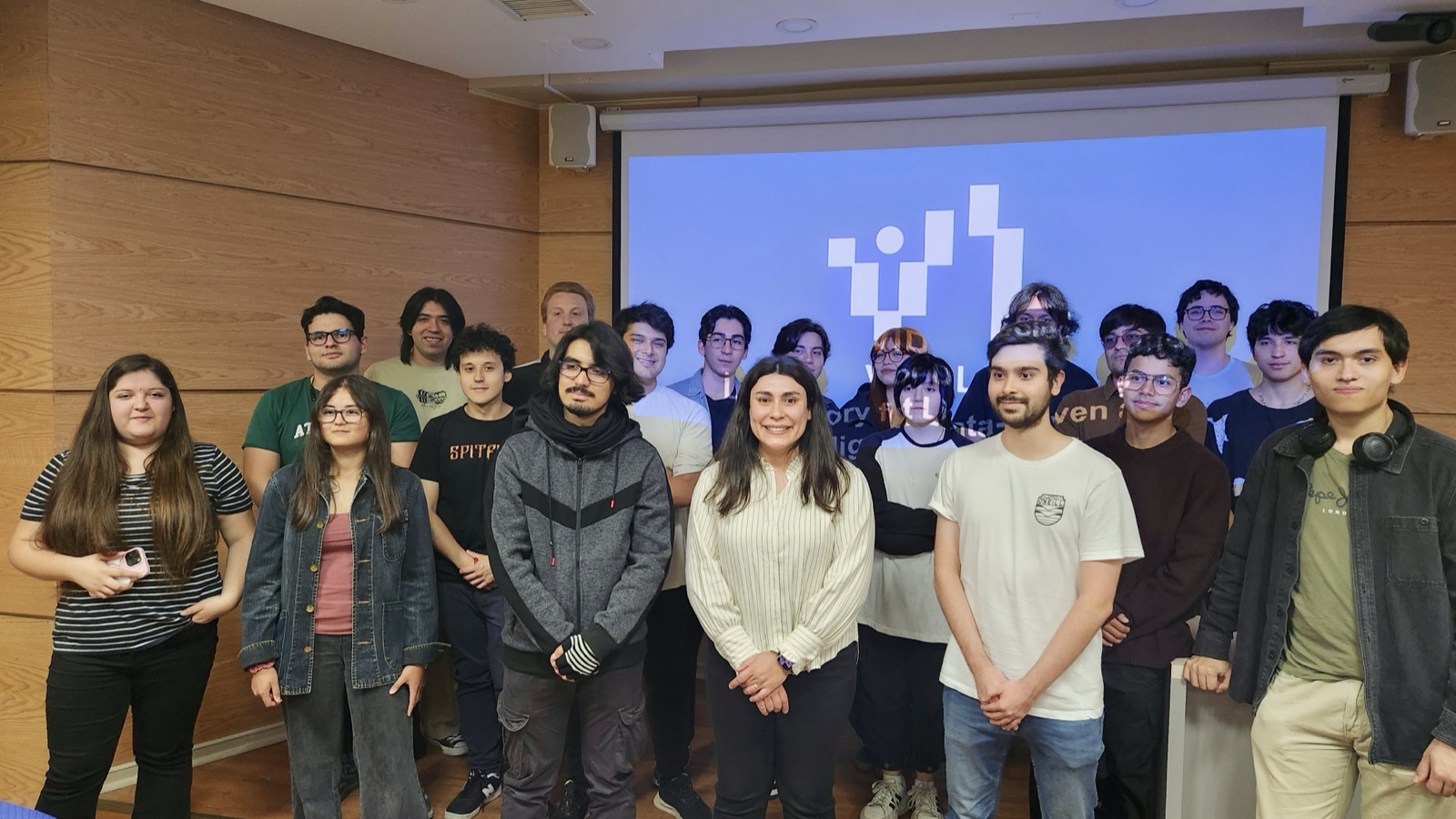
VIDALAB team
Research Assistants
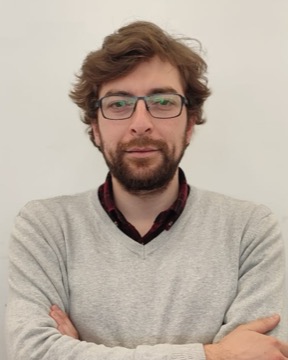
Kevin Aguilar
Kevin Aguilar
Bioinformatics Engineer
Patricio Herrera
Patricio Herrera
Data Scientist
PhD Students
Alison Matus Bello
Alison Matus Bello
PhD in Artificial Intelligence (UdeC)
Advisor
Alejandra Miranda Vergara
PhD in Engineering (UdeC)
Co-advisor
Gabriela Vásquez Marambio
PhD in Bioinformatics and Systems Biology (UNAB)
Co-advisor
Sofia Rodríguez Muñoz
PhD in Computational Biology (USS)
Co-advisor
Master Students
Francisco Ballesteros Cárdenas
M.Sc. in Civil Engineering (Co-advisor)
Co-advisor
Undergraduate Students
Dreyko Paredes Mansilla
Computer Science Engineering
Fernanda Corona Vásquez
Computer Science Engineering
IZ
Iván Zapata Ávila
Computer Science Engineering
RZ
Raúl Zapata Villalobos
Computer Science Engineering
Sergio Opazo Zamorano
Computer Science Engineering
VS
Vicente Sanhueza Pereira
Computer Science Engineering
Undergraduate Researchers
AC
Andrés Chaparro Maldonado
Computer Science Engineering
Antonio Benavides Puentes
Computer Science Engineering
Bastián Bernal Villegas
Computer Science Engineering
Braian Urra Bastias
Braian Urra Bastias
Computer Science Engineering
Catalina Fierro Arévalo
Mechanical Civil Engineering
Daniel Támaro Sierra
Computer Science Engineering
Diego Muñoz Moreno
Diego Muñoz Moreno
Mechanical Civil Engineering
Francisca Núñez Larenas
Computer Science Engineering
JC
Javier Campos Contreras
Computer Science Engineering
Juan Felipe Raysz Muñoz
Computer Science Engineering
Manuel Gutiérrez Ulloa
Mechanical Civil Engineering
Maximiliano Cabrera López
Mechanical Civil Engineering
Oliver Peñailillo Sanzana
Computer Science Engineering
Sebastián Vega Varela
Computer Science Engineering
Valeria Quiroga Carrere
Computer Science Engineering
Alumni

Alumni UdeC

Former members who carried out their research and thesis work at VIDALAB.
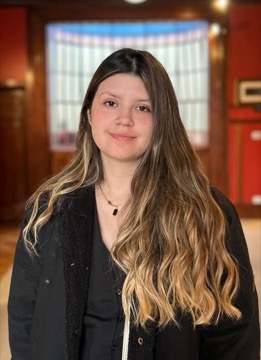
Martina Lara
Martina Lara
Industrial Engineering
Macarena Madrid Becerra
Computer Science Engineering
Vicente Ríos Adasme
Vicente Ríos Adasme
Computer Science Engineering
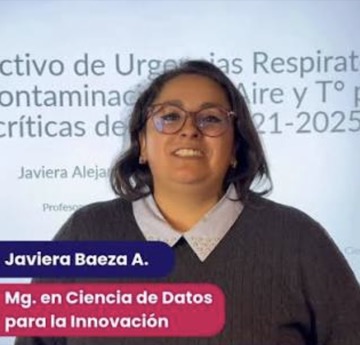
Javiera Baeza Acuña
Javiera Baeza Acuña
Master's Degree in Data Science for Innovation
Franchesca Mora
Franchesca Mora
Computer Science Engineering
NP
Nicolás Pino Leal
Computer Science Engineering
Tomás Cid
Tomás Cid
Computer Science Engineering
Tomás Contreras Kong
Computer Science Engineering
Brendan Rubilar
Brendan Rubilar
Computer Science Engineering
Matías Medina de la Peña
Computer Science Engineering
NJ
Nicolás Jarpa Jeldres
Computer Science Engineering
Join us

Become part of VIDALAB

We are always looking for curious and motivated people to join our team.
Open positions
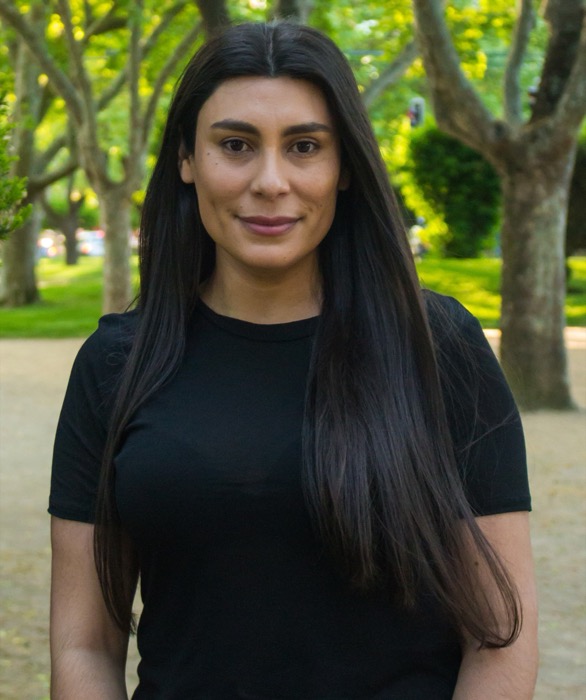
Whether you are a student looking for a thesis topic or a researcher interested in a postdoc — we'd love to hear from you. A full list of graduate programs I participate in is available at postgrado.udec.cl ↗
PhD Students
I invite applications to the PhD in Computer Science program and the PhD in Artificial Intelligence program
Master Students
Open positions in the Magíster en Ciencia de Datos para la Innovación and the Magíster en Ciencias de la Computación.
Postdocs
I welcome postdoctoral researchers interested in machine learning, deep learning, bioinformatics, or data-driven life sciences.